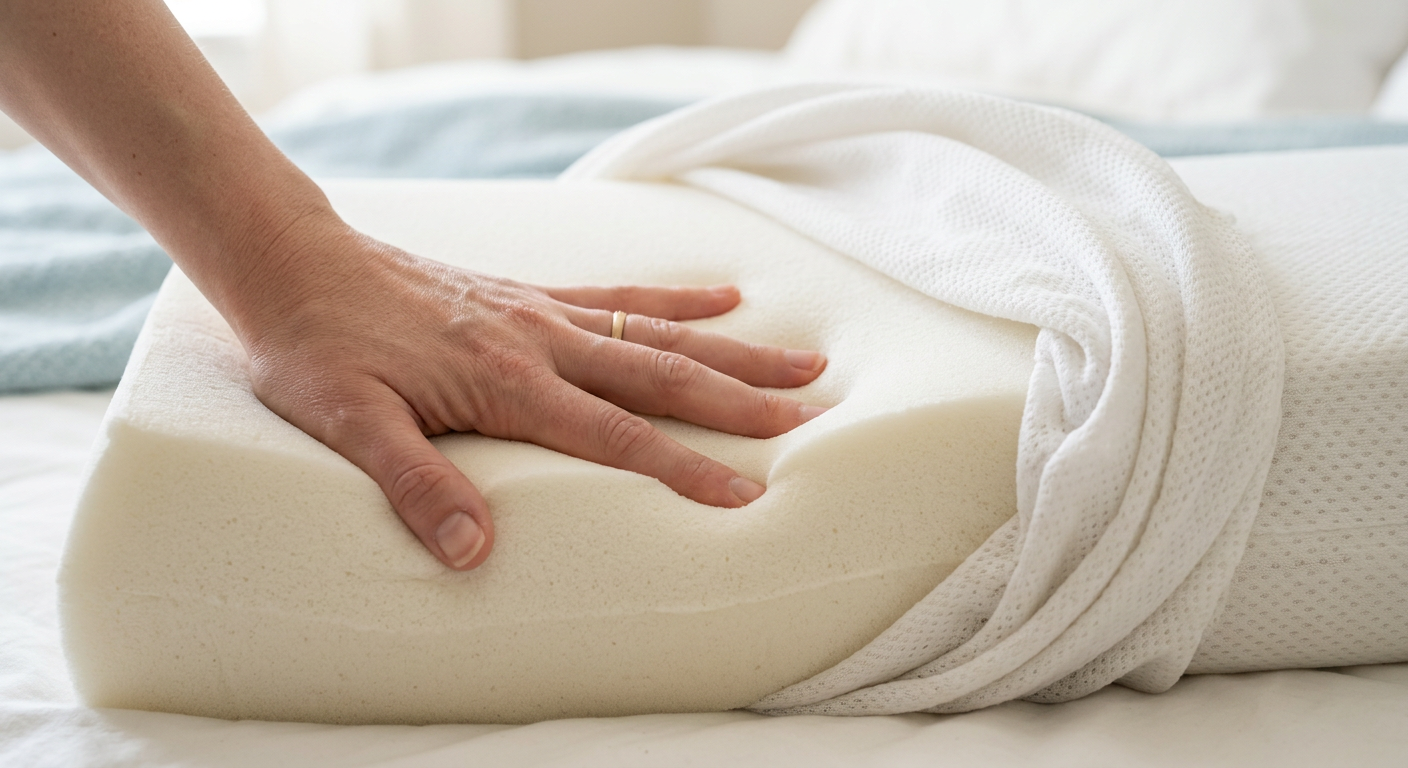
Side, Back or Stomach: How Your Sleeping Position Affects Neck Alignment
Your sleeping position changes how much support your neck needs. Here is how to match your pillow to the way you actually sleep.
Why alignment matters
During sleep, your neck spends several hours in one position. If your pillow is too high, too low or too soft, the neck can be held at an angle for long periods — a common reason people wake up feeling stiff.
The goal of a good pillow is to keep your head, neck and upper spine in a roughly straight, relaxed line, whatever position you sleep in.
Side sleepers
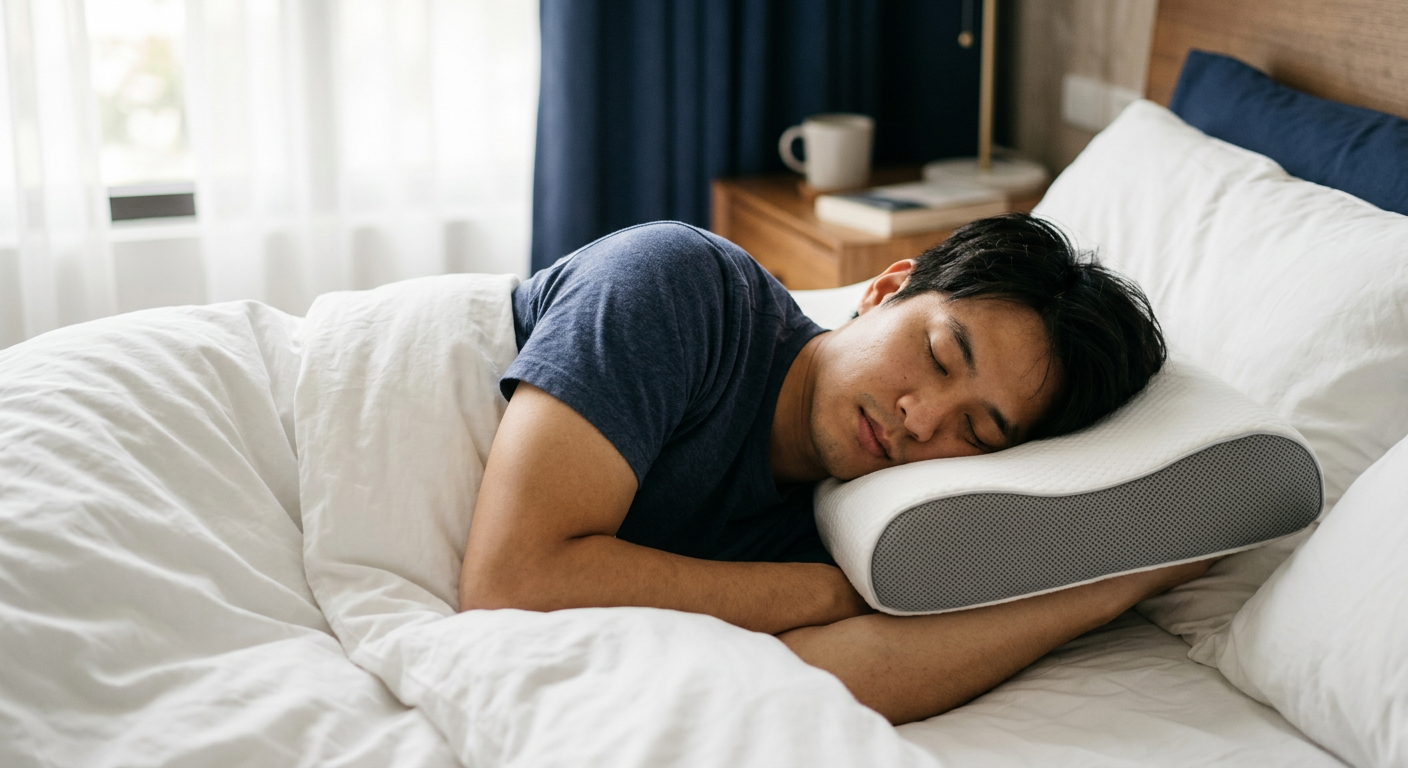
Side sleeping is the most common position. Because the shoulder creates a large gap between the mattress and your head, side sleepers usually need a firmer, higher pillow. A contoured pillow with a raised edge can fill this gap and stop the head from tilting down.
Back sleepers
Back sleepers need a medium-height pillow that supports the natural curve of the neck without pushing the chin toward the chest. The cradle shape found in ergonomic pillows is designed with this position in mind.
Stomach sleepers
Stomach sleeping turns the head sharply to one side. If you sleep this way, a very low, soft pillow — or none at all — is often recommended. Many people gradually transition to side sleeping with the help of a supportive pillow.
Quick self-check
Lie down in your usual position and ask a partner to look at you from the side or the end of the bed:
- Is your nose roughly in line with the centre of your chest?
- Is your chin neither tucked down nor tilted up?
- Is there an unsupported gap under your neck?
This article is for general information only and is not medical advice. Consult a qualified healthcare professional for persistent pain or sleep problems.