Memory Foam vs. Traditional Pillows: What Changes When You Switch
Polyester fibre, cotton, buckwheat or memory foam? We compare the materials and explain why memory foam is popular for ergonomic pillows.
Traditional fibre and cotton pillows
Fibre-filled pillows are soft and inexpensive, but they tend to clump and flatten over time. Many need regular fluffing, and support can vary from one night to the next.
What makes memory foam different
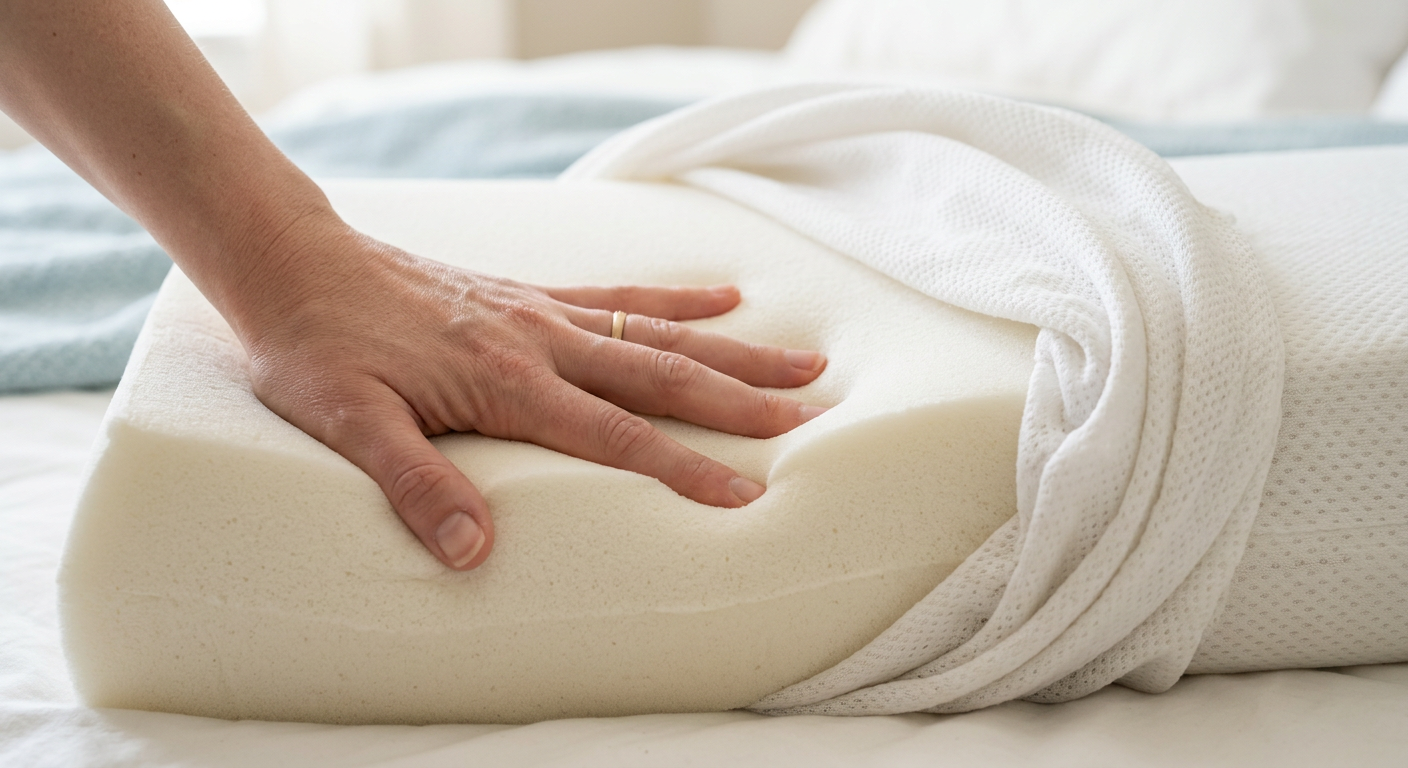
Memory foam (viscoelastic foam) softens slightly with body warmth and spreads pressure across a wider area. It moulds to the shape of your head and neck, then slowly returns to its original form when you get up.
Because it holds its structure, memory foam can be cut into precise ergonomic shapes — something that is impossible with loose filling.
Pros and cons
Memory foam is not for everyone, so it is worth weighing both sides:
- Pro: consistent support night after night.
- Pro: holds ergonomic contours.
- Pro: absorbs movement and pressure.
- Con: firmer, slower feel that takes a few nights to get used to.
- Con: can trap heat unless paired with a breathable cover and ventilation.
The bottom line
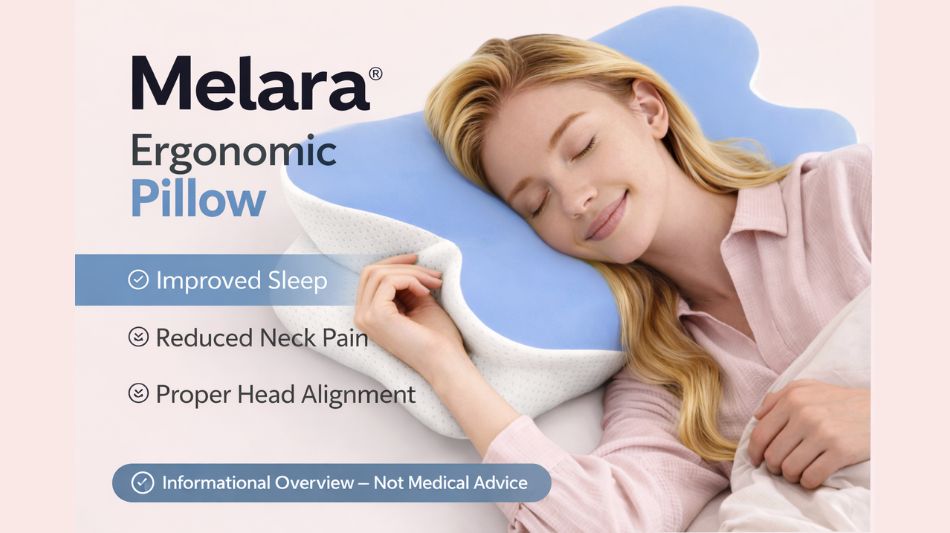
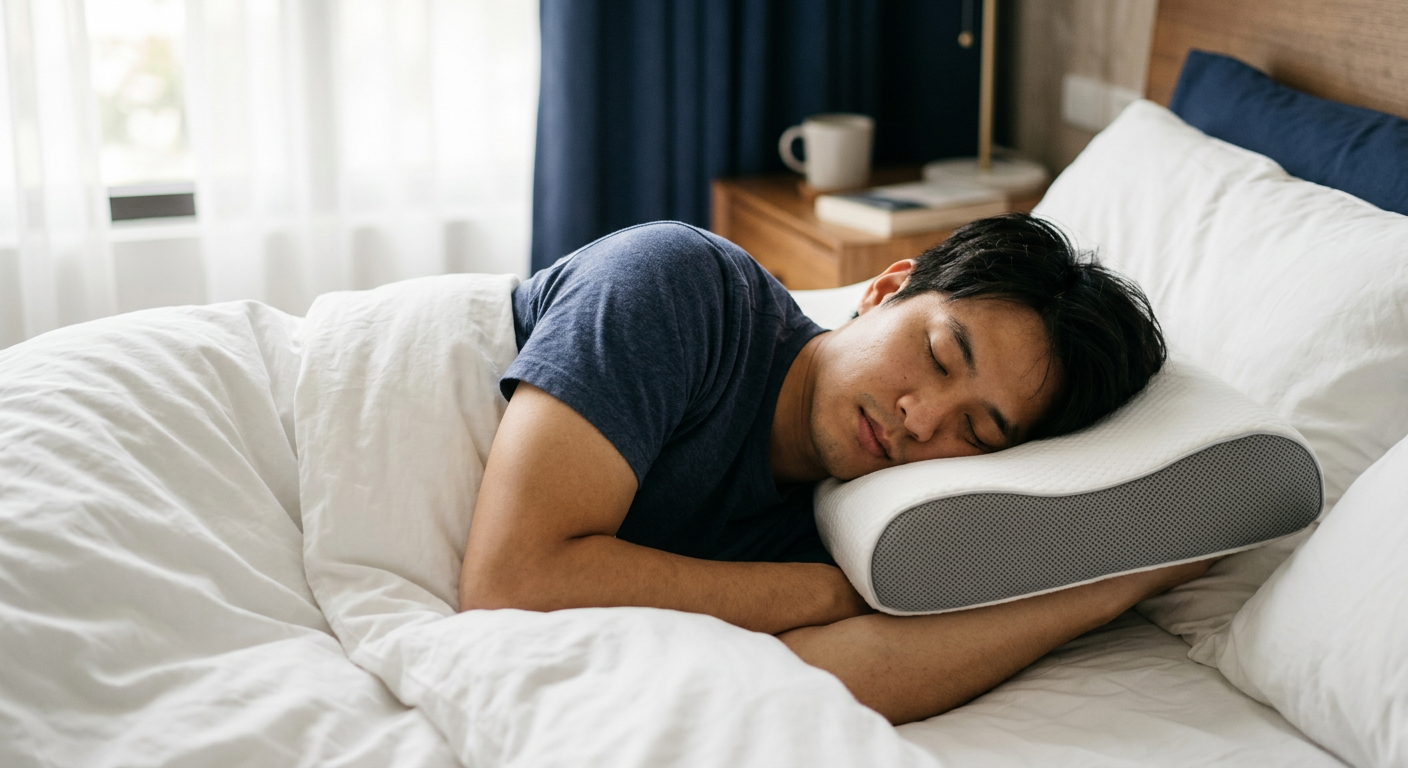
If you want stable, shaped support, memory foam is hard to beat. Look for a pillow, like the Melara Apex, that combines a quality foam core with a breathable fabric cover to manage warmth.
This article is for general information only and is not medical advice. Consult a qualified healthcare professional for persistent pain or sleep problems.